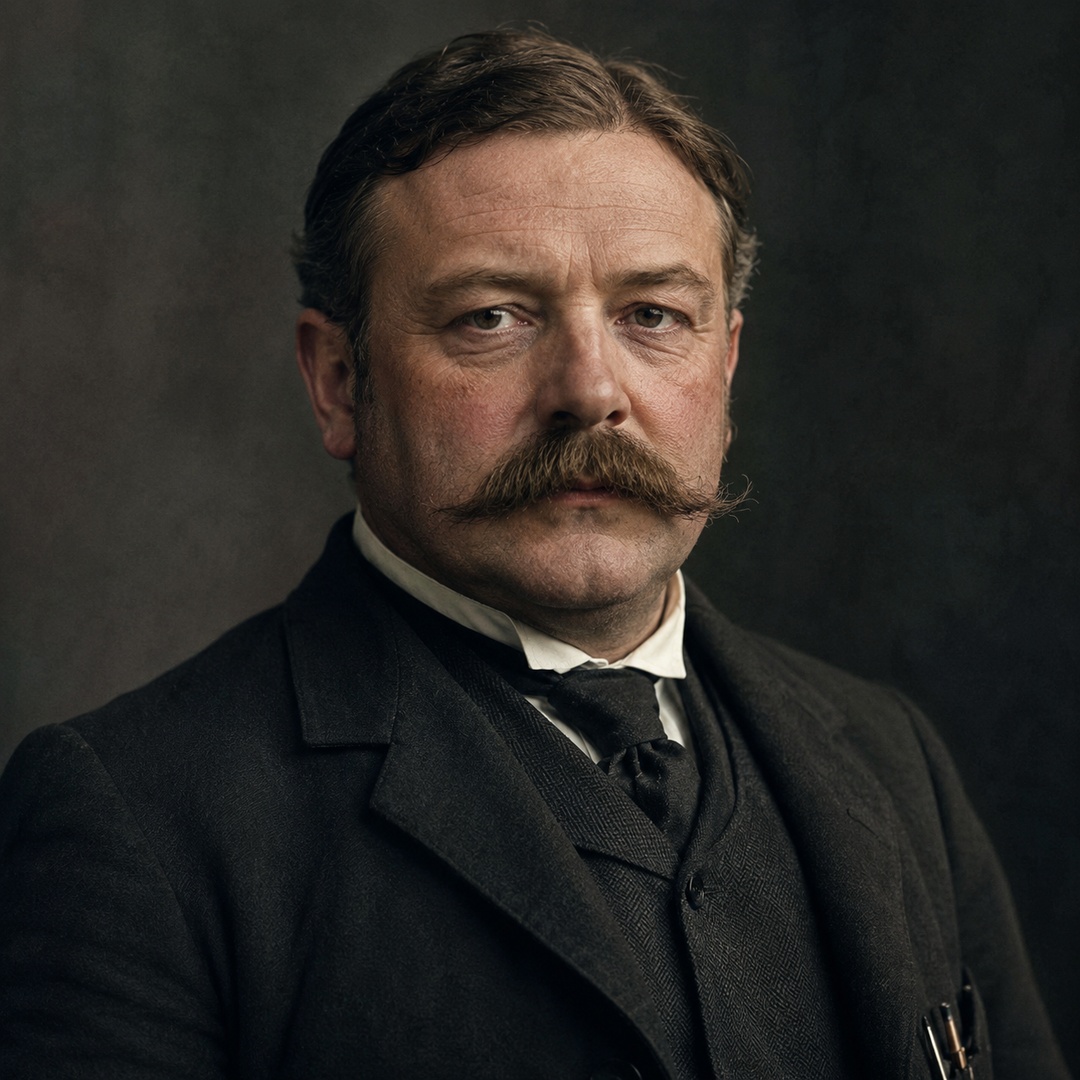
Your time with Arthur Vance is your own. He will take any question you have, and the more of yourself you bring to the conversation, the richer it becomes. These twenty-seven questions — sorted into abductions and broader UFO encounters — can be starting points, but you're free to begin with one of your own.
"Gustavo González and José Ponce come face to face with a three-foot creature with eyes that glow on their own, and when González stabs it, the blade skids off like he'd hit metal, not flesh. What actually happened outside Petare that night?"
No missing time, no hypnosis, just two sober men and a police report filed within the hour.
"Antônio Vilas-Boas is dragged aboard a craft and examined, and then a woman who never speaks a word points at her own stomach, then up. What do you make of the case that came before there was any template to borrow from?"
Bruises that bloomed for months, and a story he never once changed in over thirty years.
"Betty and Barney Hill are driving home at night when they lose two hours they can't account for, and under hypnosis, Betty describes a star map she says she was shown. What actually holds up about the case that created the entire abduction template?"
A postal worker who dreaded the publicity, and never once wavered.
"A being named Quazgaa walks through a closed door, freezes Betty Andreasson's whole family in place, and speaks to her without making a sound. What makes this the deepest single case file you've ever built?"
A decade of silence, then her own eleven-year-old daughter's hypnosis independently matched her mother's account.
"A young cop logs 'saw a flying saucer... believe it or not' in his own patrol book that same night, before anyone ever put him under hypnosis. What actually happened to Herb Schirmer?"
A federally funded committee confirmed his missing twenty minutes before regression was even suggested.
"Police leave Charles Hickson and Calvin Parker alone in a room with a hidden recorder running, expecting to catch them laughing about a hoax. What did that tape actually catch?"
The same month his own career began, and the case he says he built it on.
"The Avis family drives through a wall of green fog for what felt like three seconds, and comes out the other side three hours later. What changed in that family afterward is what actually keeps this file open for him."
A breakdown, a quit job, and a ten-year-old who tested years ahead of his age within a year.
"A polygraph clears Charles Moody, but his own account of the craft's distance changes from four hundred miles to six thousand between two tellings. How do you hold a case together when the witness's own story doesn't?"
A rash and ninety missing minutes his own physician had no reason to invent a cover for.
"Six coworkers watch a beam of light take a man right in front of them, and he reappears five days later having lost weight he can't explain. Every one of them passed a polygraph. What do you actually believe happened to Travis Walton?"
One of the only abduction cases with a crowd of witnesses to the actual disappearance.
"Two four-year-olds nobody believed, drawings instead of words, and thirty years later a support network with a dozen chapters worldwide. What do you actually make of Audrey and Debbie Hewins, the twins who built Starborn?"
A childhood account, a failed 2013 prophecy, and an organization that's given real people somewhere to be believed regardless.
"Jack Weiner, Jim Weiner, Charlie Foltz, and Chuck Rak all go through matching hypnosis sessions, matching sketches, four passed polygraphs — and forty years later, one of them said it was all a hoax. Does that ruin the case, or is there still something real underneath it?"
Once his strongest multi-witness file, now his best lesson in how fast that kind of corroboration can come apart.
"A dog. Rashes. Swollen eyes overnight. A ring in Debbie Jordan's grass that killed the yard for five years. What do you do with physical proof that something happened, when it still can't tell you what?"
More physical fallout than almost any other file he keeps.
"A famous horror novelist convinces one of the hardest men to fool in American letters — 'no doubt about it,' he said — and then spends the next thirty years telling the story a different way almost every time. What do you actually make of Whitley Strieber?"
The case that gave the whole phenomenon its most famous name, and its least stable one.
"A claim gets Linda Cortile a stalking, an attempted assault, and a man's own documented unraveling — and the abduction underneath all of it is never actually proven. What do you make of a case like that?"
The file he keeps to prove more witnesses doesn't always mean more truth.
"Kelly Cahill and a stranger in a second car both describe a wound they couldn't have compared notes on, and a report that was supposed to prove it all — buried by the very people it would have vindicated. What actually happened there?"
The best corroboration he's ever had on a case, and the clearest proof that corroboration alone isn't enough.
"Terrell Copeland's sightings check out fine on their own. Then a mystery visitor at his door, an unnamed blood disorder, and TV host Bill Birnes floating a hybrid theory live on air. Where does the real case end and the production begin?"
He calls it the file with the lowest floor under it of anything he keeps.
"How did you get into all this?"
A stringer sent to mock a "saucer story," and a farmer who wept describing what hovered over his field.
"Did you ever see anything yourself?"
The one night he was the witness instead of the investigator. He tells it in full, every time he's asked.
"What actually happened with the Navy Tic Tac?"
The strongest modern case file he's got.
"What's the one case you could never explain?"
Not the famous ones. The one that still sits open on his desk after five decades of trying to close it.
"Do you believe any of it is real?"
The distinction his whole career is built on — and it isn't the one most people expect him to make.
"What happened to your friend?"
Dale Pruett called him once, late at night, said he'd found something. He never arrived. Ask carefully.
"What did the government finally admit in 2017?"
The New York Times story that dragged a Pentagon program into daylight — and confirmed what farmers had told him since the Nixon years.
"What's the case you're proudest of debunking?"
A celebrated case he called a fabrication himself, in public — and the friendships it cost him.
"Why do people still get laughed at for this?"
Governor Fife Symington's own confession about the Phoenix Lights, the sixty-two children of Zimbabwe's Ariel School, and the ridicule that outlives every one of these stories.
"'Major Richard French' rents a Mustang, tracks down Mrs. Butler's home address, and shows up asking about UFOs and CB radios — but he's never once seen Jello in his life. What do you make of a detail that specific?"
One of the strangest files he keeps, and honestly one of the funniest.
"Rancher Mac Brazel finds strange debris scattered across his sheep ranch, and the Army's own press office puts out a release calling it a 'flying disc' — before reversing itself within twenty-four hours and calling it a weather balloon. What actually happened at Roswell?"
The case that gave the whole phenomenon its name, and the reversal that's fueled decades of distrust in the official one.